
The G-word
Why the gambling industry won't call a spade a spade.

THE GAMBLING INDUSTRY really doesn’t like the word “gambling.”
It’s an old strategy that’s especially relevant today, as evidence accumulates to suggest that gamblers take greater risks when that label isn’t top of mind.
As I report in my book “Everybody Loses: The Tumultuous Rise of American Sports Gambling” (out January 20th), when the industry formed a lobbying group in 1994, it chose the name the American Gaming Association because “gaming” sounded innocent and unthreatening, whereas “gambling” evoked addiction, the threat of financial ruin, and other perils.
In the mid-2010s, FanDuel and DraftKings popularized daily fantasy sports, allowing Americans to risk money on players’ performance even as bookmaking was still illegal everywhere in the U.S. but Nevada. The Unlawful Internet Gambling Enforcement Act of 2006 had exempted fantasy sports, but regulators and prosecutors eventually cracked down on FanDuel and DraftKings, accusing them of exploiting the fantasy loophole to offer a form of gambling. Facing those threats, DFS employees were discouraged from even uttering “the G-word,” as they called it around the office.
More recently, sportsbooks have continued to avoid saying “gambling”—not for legal reasons, but because of the stigma. (At DraftKings, losing sports gamblers are sometimes referred to euphemistically as “net depositors.”) When Senator Richard Blumenthal of Connecticut asked sportsbooks to disclose their marketing partnerships with universities, in 2024, DraftKings’s letter in response made 61 references to “gaming” but not one to “gambling,” as in, “DraftKings will continue to support efforts to combat problem gaming.”
A sportsbook executive even once told me about policies for minimizing the rate of “problem gamers.” There’s a reason the Kenny Rogers song is called “The Gambler,” not “The Gamer”—nobody actually talks that way. But again, sportsbooks recognize that “gaming” sounds benign, more likely to evoke video games than a casino.
These companies also prefer the word “betting.” I once interviewed an industry-friendly consultant who cut me off after I’d made a few references to sports gambling. “Gambling,” he explained, should be reserved for games in which it’s impossible, long term, to overcome the house edge, such as craps or slots. “Betting,” on the other hand, suggests people with enough skill can turn a profit. More importantly, he continued, sports bettors risk money based on their opinion of a game, and in turn, that heightens the thrill of watching.
“Those people may or may not be gamblers,” he said, “but they definitely enjoy betting on sports.”
I’m not sure sure about that. For one, a lot of sports bettors like to wager on whether the coin toss at the Super Bowl will be heads or tails, which is as arbitrary as it gets. Also, sportsbooks, whether inside physical casinos or online, exist largely for the purpose of bringing people in, hoping they’ll eventually drift over to more profitable slot machines and table games. In other words, the premise of the sports betting business is that these customers are gamblers at heart.
Still, labeling sports betting as something other than gambling clearly makes a difference: Among sports bettors ages 21 to 34, a 2020 survey found that 76% of them consider sports betting a form of entrepreneurship, and a 2025 survey found that 90% of bettors ages 18 to 34 consider sports betting a way to make money. In truth, roughly 1% of sports bettors come out ahead long term.
Gambling counselors tell me that their clients often don’t think of sports betting as gambling. That’s why the industry’s use of the phrasing “problem gaming” and “responsible gaming” is so counterproductive. Sportsbooks say one of the core principles of responsible gaming is that customers should appreciate that sports betting isn’t a way to make money. So why insist on wording that obscures that fact?
Prediction markets are now following a similar playbook. Companies such as Kalshi and Polymarket, which allow people to bet on sports, elections, and all types of current events, are, legally speaking, financial exchanges, not gambling operators. They prefer to describe what people do on their platforms as “trading,” but also tolerate “betting,” which leads to awkward verbiage like “sports betting traders.”
A vast majority of the money flowing through Kalshi is on sports, in ways that, from a customer’s perspective, are basically indistinguishable from sports gambling: single-game bets, player props, and now parlays. Yet earlier this year, Kalshi CEO Tarek Mansour said, “I just don’t really know what this has to do with gambling.” People who cover prediction markets, including the estimable Dustin Gouker, say it’s obvious that prediction markets are a form of gambling.
Earlier this month, I wrote for The New Yorker about CNN and CNBC’s decision to partner with Kalshi. They’re both getting paid to integrate Kalshi’s odds in their coverage, and CNBC will also receive money for funneling new customers to Kalshi. Gouker and others suspect this could foreshadow a deluge a similar deals between news outlets and prediction markets.
These deals help legitimize prediction markets and normalize betting on them. (FanDuel and DraftKings recently launched their own prediction markets.) But will people appreciate that prediction markets are just another mode of gambling, especially if journalists become reluctant to call a spade a spade? Just as sports journalists can be anxious about upsetting their sportsbook advertisers, I worry that news organizations partnering with prediction markets could have a chilling effect on how those companies are covered.
By the way, I’ve heard speculation that prediction markets could one day offer “event contracts” on the outcome of a spin on a slot machine or a roulette wheel, allowing them to offer online casino games even in states where that’s illegal.
For now, just seven states have legalized online casinos, though more states are likely to face pressure to follow suit, considering the extraordinary profits generated by online slots, bingo, blackjack, and the like. Last year, Pennsylvania collected $1.05 billion in tax revenue from online casinos, compared to $188 million from sportsbook apps. As The New York Times reported recently, online casino games have become the No. 1 reason for calls to Pennsylvania’s problem-gambling hotline.
Naturally, the online casino industry—which includes FanDuel and DraftKings—doesn’t like to call that business gambling, either. They prefer “iGaming.”
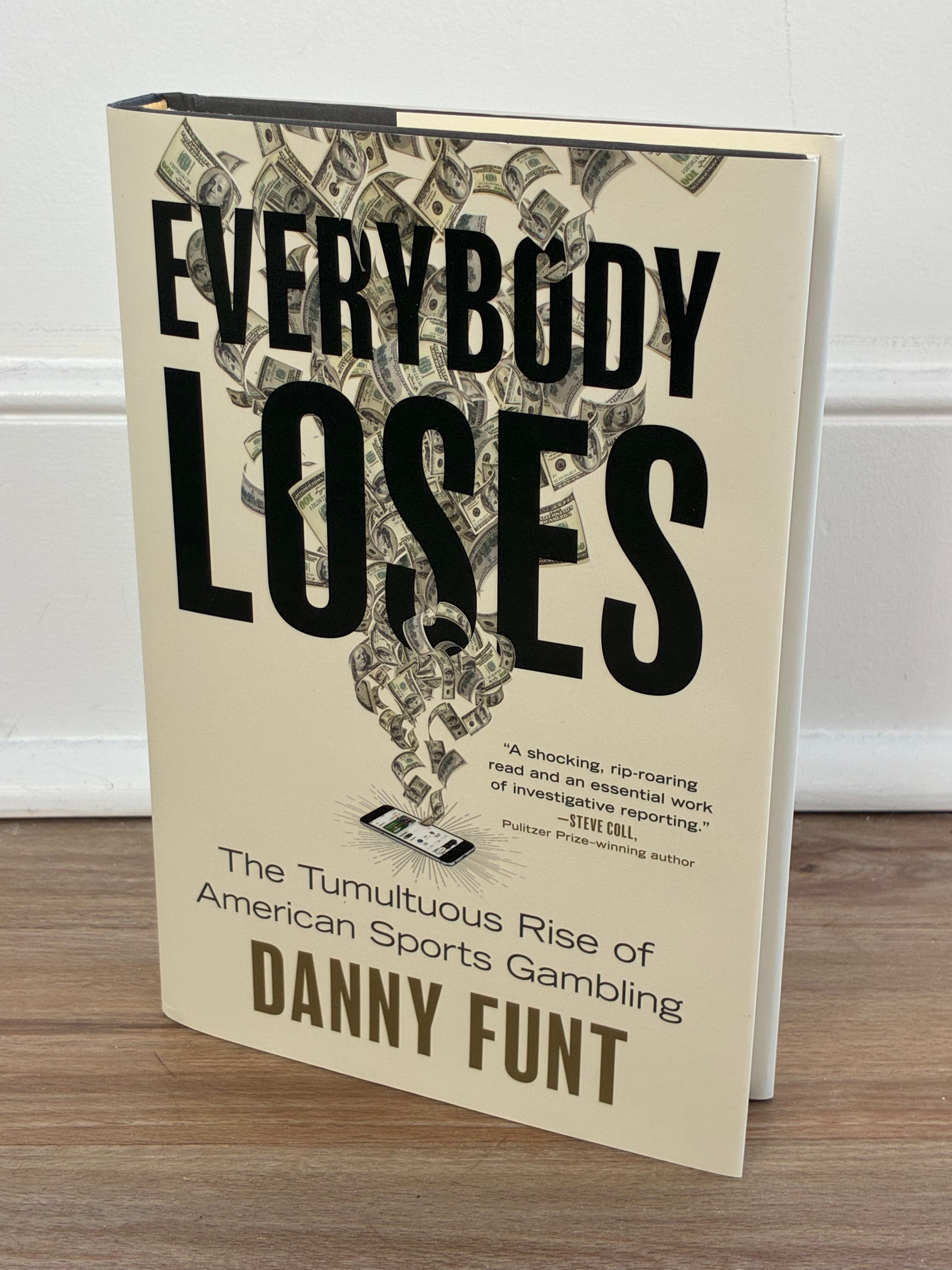
IT’S HARD TO BELIEVE my book will go on sale in less than a month. I got a box of hardcovers in the mail recently, and I’m happy to report they look great:
I’m also happy to share some early feedback. Booklist, in a starred review, wrote, “Funt masterfully chronicles the meteoric rise in gambling and societal acceptance of a predatory business in a book that will simultaneously inform and alarm readers.”
In another starred review, Library Journal wrote, “Funt’s storytelling ability makes his work easy to read and understand. Its thoroughness gives the book the potential to become a classic text.”
There’s still time to preorder a copy. From today until January 1st, Barnes & Noble is offering 25% off preorders of all books for customers who use the coupon code PREORDER25. You must be a B&N Rewards member to qualify, but it’s free to enroll.
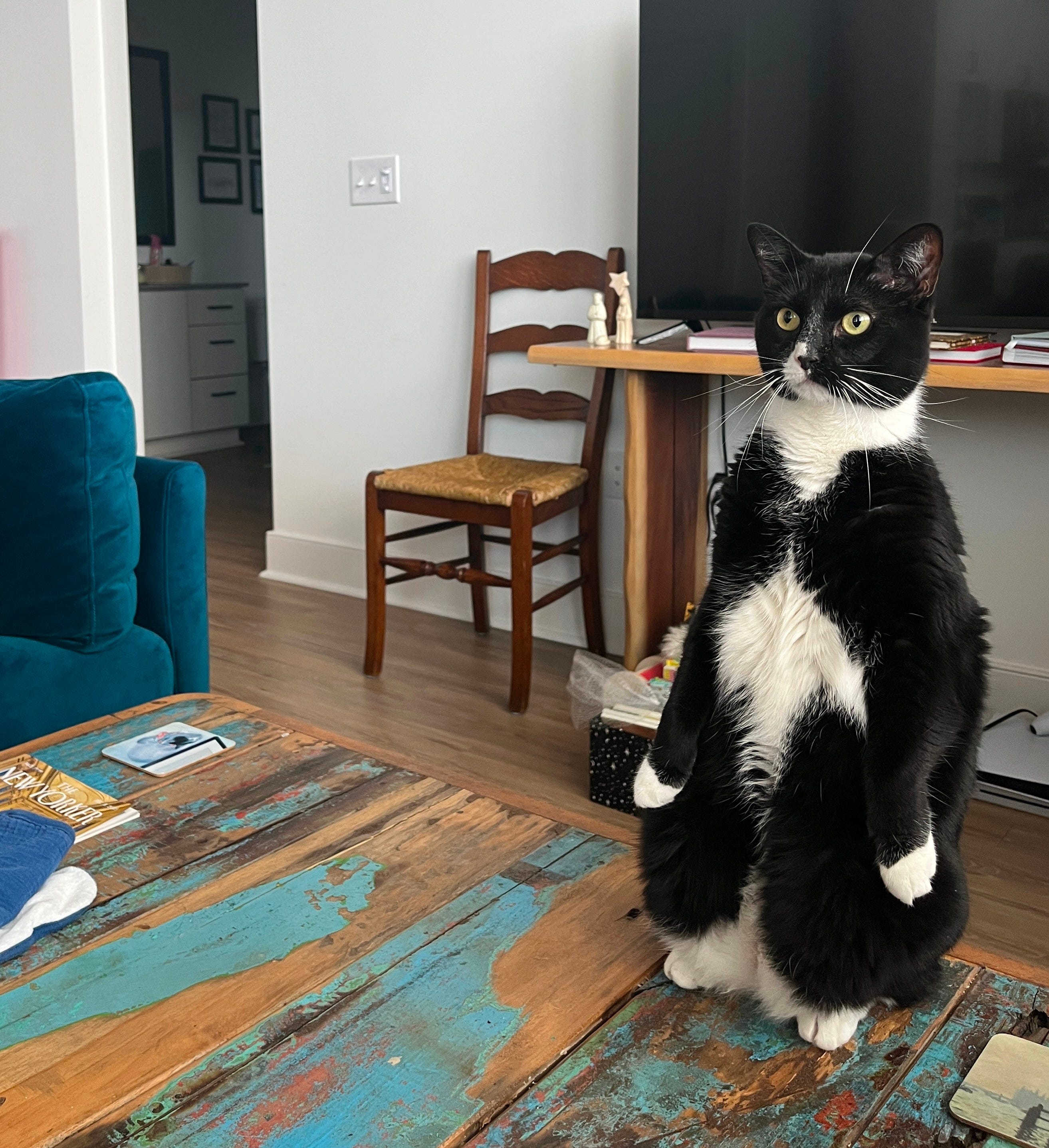
I hope you all have a very happy new year. This was Wynnie when the hardcovers arrived:
I ordered this book last fall!